
Polyester needs better PR
Let’s Talk Fabrics — Why We Choose What We Choose

When 1987 first started, it felt like we could do no wrong. We were small, scrappy, and every hoodie that left our hands felt like it carried a little piece of Boston pride. As we’ve grown — especially over this past year — I’ve noticed what happens to every brand that scales: more eyes, more love, and more feedback.
I actually think that’s healthy. The more people care, the more they speak up. And when I see valid critiques — like size diversity in our campaigns — I take them to heart. Representation is a priority, and it’s something we’re actively addressing.
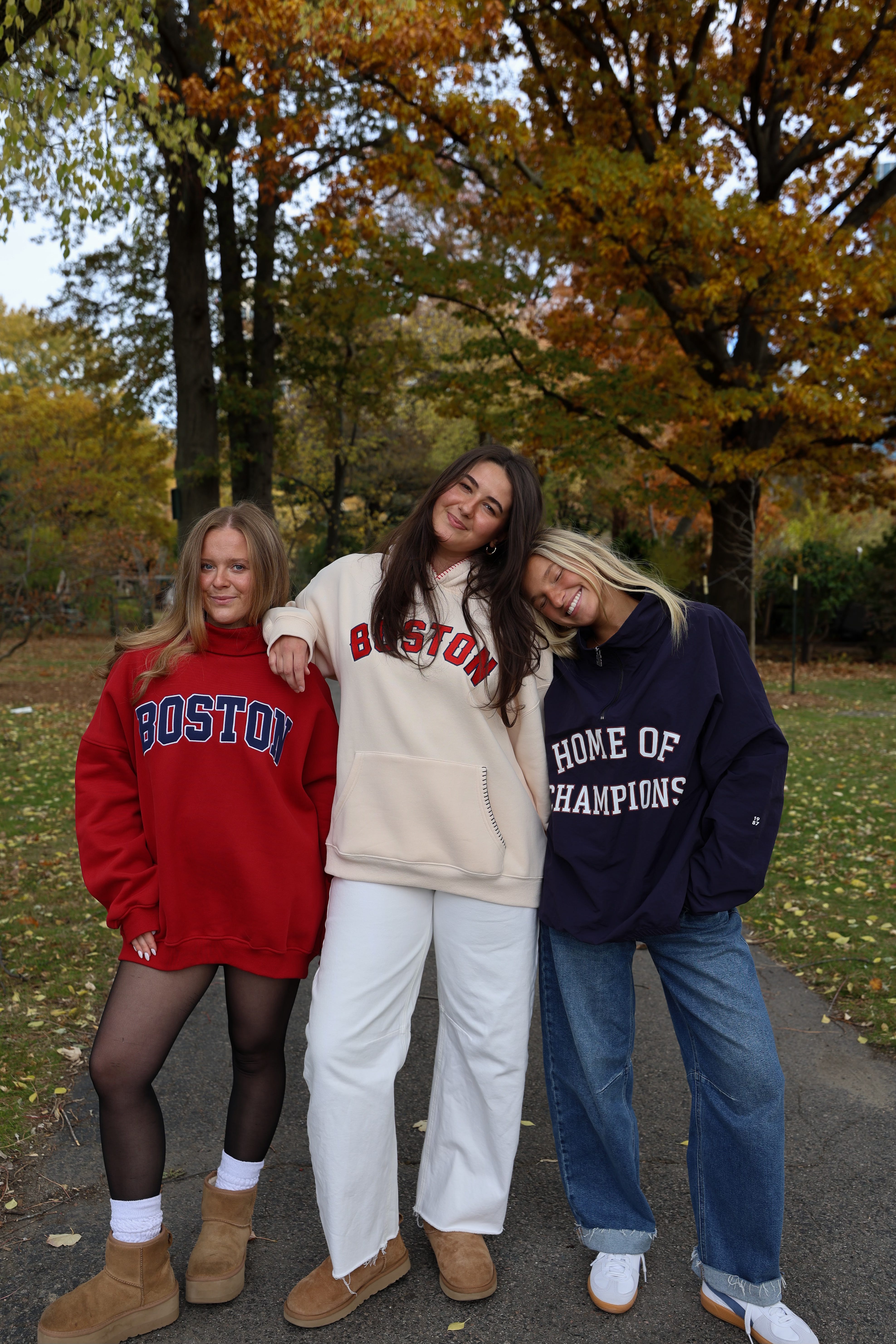
But there are other critiques that come from a place of curiosity or confusion — and one that’s popped up recently is about fabric composition.
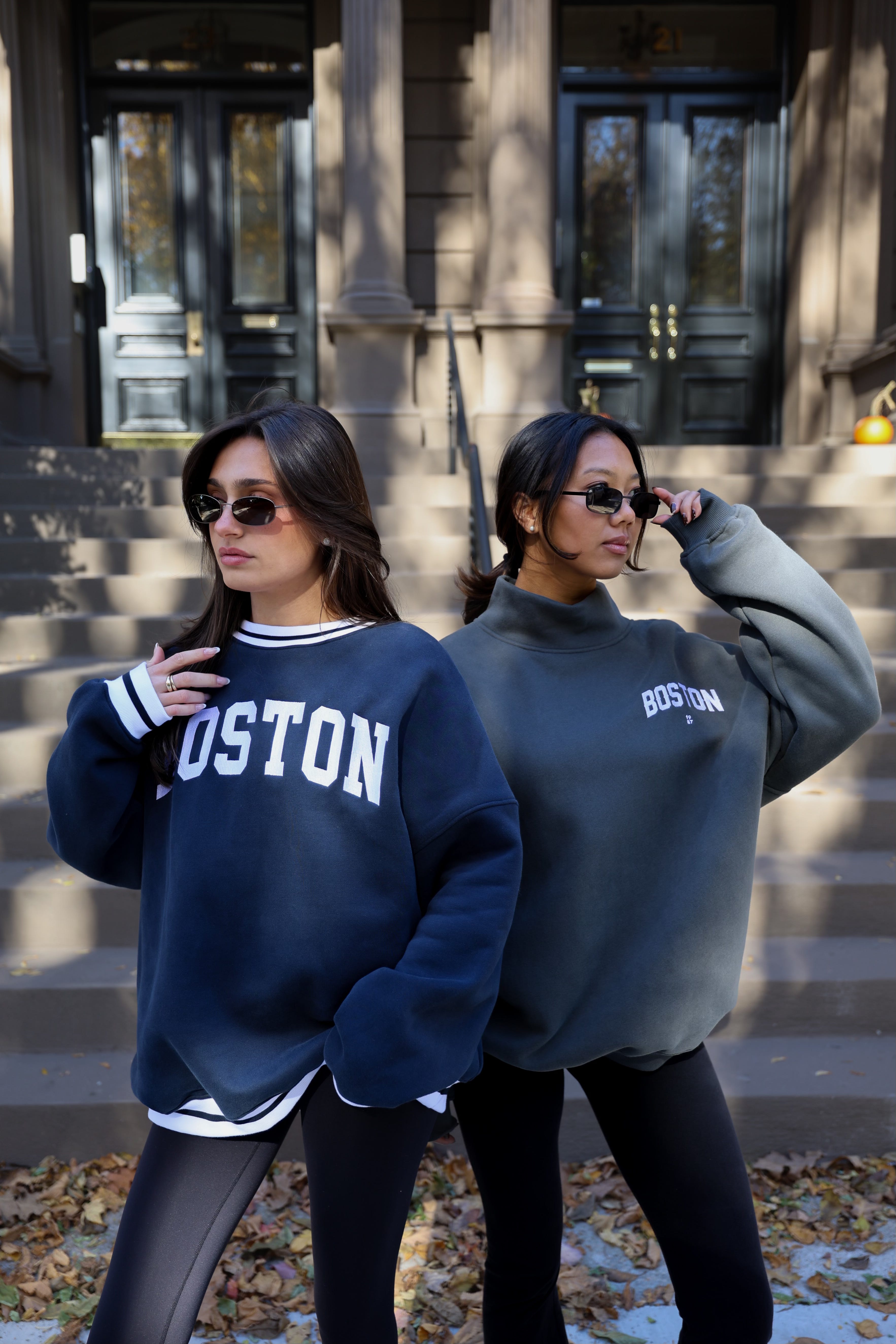
The “100% Cotton” Debate
I’ve seen people online say that 100% cotton is the only “good” material — and I get where that comes from. Cotton is natural, breathable, and familiar. But here’s the truth: our original 1987 hoodie — the one everyone fell in love with — has always been a cotton-poly blend.
It’s what gives our sweats that buttery, cloud-like softness people still talk about years later. It’s what keeps them from shrinking, stretching, or losing color. And it’s what makes them last through wash after wash while still feeling luxurious.
Polyester isn’t a “cheap filler.” In textile design, it’s what gives a garment its shape, structure, and that ultra-soft brushed finish you feel when you touch our fleece. Multiple textile sources back this up — blends are often more durable, shape-retaining, and colorfast than 100% cotton.
So when someone says, “They’re using polyester now,” the truth is: we always have. It’s the foundation of the fabric you loved from day one.
Why Not 100% Cotton Hoodies?
We’ve tested 100% cotton versions — they can be great for certain styles like tees or vintage-inspired crews — but for our heavyweight hoodies, the feel just wasn’t the same. Cotton on its own can be stiffer, heavier, and less plush when knit into dense fleece.
Could we do it? Absolutely. And we may one day introduce a capsule of 100% cotton or organic cotton pieces for those who prefer that - if that’s what you *truly* want. But we want to be transparent that it will feel different — more structured and less cloud-like.
The bottom line is that softness, weight, and warmth come from more than just the fiber itself — it’s about the construction, knitting, brushing, and finishing process. One of our most-loved cotton-poly blends is something our production partner developed specifically for us (with batch dyes for the perfect color) — a proprietary mix that you can’t find on the open market — which is why it feels like 1987.
The Fabric Equation
When we choose materials, we look at everything:
Color: Does the dye hold and match the design vision?
Hand-feel: Does it feel as soft, thick, and plush as it should?
Seasonality: Is it the right weight for Boston winters or Miami spring?
Longevity: Will it still feel amazing after 50 washes?
Sometimes that means a 80/20 blend. Sometimes 50/50. Sometimes French terry for summer. Sometimes 100% cotton. Each piece is intentional — not a shortcut.
For the Fabric Purists
If you’re someone who only buys 100% organic cotton and cleans your home with exclusively apple cider vinegar — I hear you. And genuinely, I’d love to build a collection that fits your world.
But for most of our community, in our experience, what matters is feel. The cozy, lived-in, ultra-soft comfort that has always defined 1987. That’s the reason we make the fabric choices we do.
The Truth Is Simple
We haven’t changed our values — we’ve evolved our understanding. I was also pro 100% cotton at the genesis of 1987. But as I was I educated by our partners I learned the importance of blends in terms of durability.
Every fabric we use is tested, refined, and chosen for how it makes you feel when you put it on. That’s the science and the soul of what we do.
Our promise: we’ll keep educating, we’ll keep listening, and we’ll keep crafting the pieces that feel like home — just softer.
— Jennifer DeAngelis, Founder, 1987